The most useful mould test isn't a kit. It's finding where the moisture is coming from. Start with what you can smell and see, check the usual spots, then look for the water behind it. If mould keeps coming back, or you can smell it but can't find it, that's when a proper inspection earns its keep.
In short:
- You can do a useful check yourself in half an hour, with no equipment.
- DIY settle-plate kits almost always grow something, because some spores are always in the air.
- Where mould is visible, health and environmental agencies say testing is usually unnecessary. The cause matters more than the species.
- Get a professional when it keeps coming back, you can smell it but not see it, someone in the home has asthma or allergies, or there's been a leak or flood.
- Scrubbing mould can send spores into the air, which is why bigger jobs are best handled with proper controls.
How can I check my house for mould myself?
- Use your nose first. A musty, earthy smell is often the first sign, especially in a room that's been closed up. Notice where it's strongest.
- Check the usual spots. Bathroom ceilings and silicone, inside wardrobes and cupboards on outside walls, behind beds and sofas pushed against walls, window frames, under sinks, and around the air-conditioner.
- Look for the signs, not just the mould. Dark spotting, staining, bubbling or peeling paint, warped skirting or timber, and grout that won't come clean.
- Look for the water. A ceiling stain after rain, a leaking tap or shower, condensation that never dries on windows, or a room that always feels damp.
- Measure the humidity. A cheap digital hygrometer from a hardware store shows how damp a room really is. The US EPA's guide to mould and moisture recommends keeping indoor humidity below 60 percent, ideally between 30 and 50 percent. A room that sits well above that for days at a time is a room where mould can grow.
- Check again after rain. Some problems only show when the weather turns. Wet-season patterns tell you a lot.
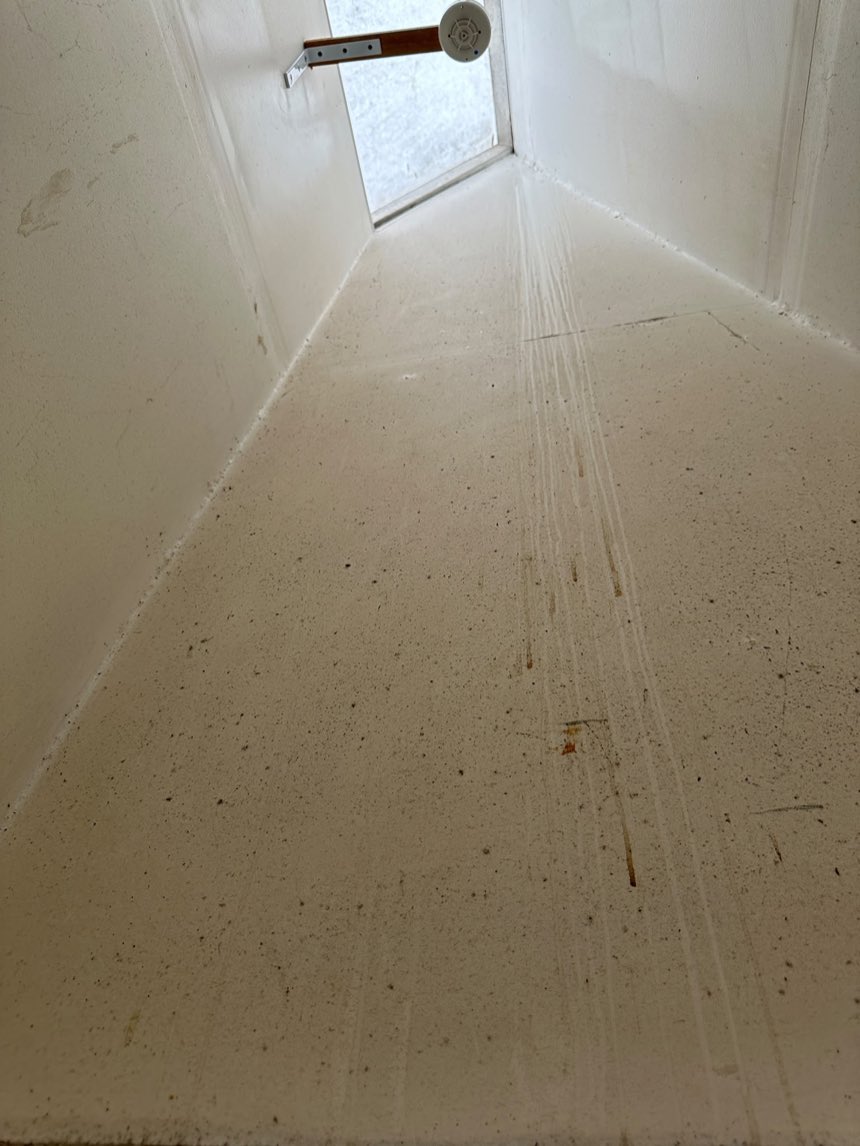
If what you find is condensation on a window that clears by mid-morning, read mould or condensation? first. It may be something you can manage yourself.
Are DIY mould test kits worth buying?
Usually not on their own. Most home kits are settle plates: a dish of growth medium you leave open in a room, then watch.
The catch is that a background level of mould spores is normal. The US EPA notes that it's impossible to get rid of all mould and spores indoors, and that some will always be in the air and in house dust. Leave a plate open and something will nearly always grow. A kit can tell you that spores were in the room. It can't tell you:
- where the mould is growing;
- how much of it there is;
- what's causing it, which is the part you need to fix.
What kinds of mould testing are there?
There are four broad approaches. They answer different questions.
| Approach | What it tells you | What it doesn't |
|---|---|---|
| Moisture investigation (moisture meters, humidity and temperature readings, thermal imaging) | Where the damp is, how far it extends, and the likely cause | The species of mould |
| Surface sampling (tape lift or swab, sent to a lab) | Whether a mark is mould, and what type | The cause, or how far it extends |
| Air sampling (sent to a lab, compared with outdoor air) | Whether indoor spore levels look unusual on the day | Where the source is |
| DIY settle-plate kit | That spores were present | Almost everything else |
For most homes with visible mould, the useful question isn't "what species is it?" It's "where is the water coming from, and how far has it spread?" Whatever the species, the fix is the same: deal with the moisture, then remove or clean the mould safely.
Do I need air testing?
Usually not. NSW Health says that since most mould is visible, it is generally not necessary to test for it in the home. The US EPA says the same: in most cases, if mould growth is visible, sampling is unnecessary.
NSW Health also notes that some mould may be hidden in wall cavities or the ceiling. That's where a moisture investigation comes in, and in a few cases lab sampling can help, such as a strong musty smell with no visible source.
Our standard inspection doesn't include laboratory sampling, and in most homes we don't think it's worth the extra cost. Whatever the species, the fix is the same: find the moisture and remove the mould. We'd rather put your money into that than into a lab report. If a case is unusual and lab testing would change what you should do, we'll tell you.
What does a professional moisture investigation measure?
This is the part a kit can't do. On an inspection we look at:
- Relative humidity and temperature, room by room. Together these show where the air is damp enough for mould, and which rooms are worst.
- Surface temperatures. When a wall, ceiling or window is colder than the dew point of the air around it, water condenses on it. That's the classic cause of mould in wardrobes and corners on outside walls.
- Moisture in materials. A moisture meter compares the suspect area with a dry area of the same material, such as plasterboard, timber or skirting. A wet reading points to a leak or rising damp, not just humid air.
- Thermal imaging. A thermal camera shows temperature differences, not water. A cold patch can mean damp, missing insulation or an air leak, so we confirm with a meter before calling it moisture.
Put together, those readings usually separate the three common causes: a leak, condensation from humid air meeting cold surfaces, or ventilation that isn't moving damp air out. Each needs a different fix. That's the answer you're paying for.
When is it worth getting a professional to check?
- Mould keeps coming back after you clean it. NSW Health notes that mould is likely to return unless the cause is treated as well.
- You can smell it but can't find it.
- Someone in the home has asthma, allergies or another breathing condition. NSW Health notes that these people may be more sensitive to mould.
- It's spreading across a wall or ceiling, or covers more than about 1 square metre. The US EPA's guide to mould and moisture says most people can handle an area smaller than about 10 square feet (roughly 1 square metre) themselves, and points to professional help above that or after a lot of water damage.
- There's been a leak, a storm or flooding. The US EPA advises drying water-damaged areas within 24 to 48 hours to prevent mould growth. If that didn't happen, it's worth checking what stayed wet.
- You're renting, buying, or need a written record for a landlord, body corporate or insurer.
On the other hand, a small spot on shower silicone that comes back only now and then is usually a ventilation habit. You probably don't need us for that.
And if the mould is plain to see and the cause is obvious, you may not need an inspection at all. Send us photos and we can often quote a mould clean straight away.
Is it safe to clean mould yourself?
For a small patch on a hard surface, usually yes, with care.
The part most people don't expect is what cleaning does to the mould. Scrubbing, dry-brushing, sanding or pulling off affected wallpaper disturbs it and can release spores into the air. From there they can drift and settle in other rooms. The EPA advises avoiding breathing in mould or spores, and suggests wearing an N-95 respirator (in Australia, a P2 mask) while you clean.
Health matters here too. The EPA notes that inhaling or touching mould or spores may cause allergic reactions in sensitive people, and NSW Health says people with asthma, allergies or other breathing conditions may be more sensitive. NSW Health also notes that most people will not experience any health problems from contact with mould. If you or someone in your home has health concerns, the EPA's advice is to talk to a health professional before you start cleaning up.
What happens after the inspection?
Every home is different, so the plan depends on what we find. Before any work starts, you get a written proposal with the scope and the price. Depending on the job, that can include:
- containing the work area where needed, so disturbed spores don't spread through the house;
- HEPA air scrubbers and dehumidifiers running while we work, to pull spores out of the air and dry out the moisture;
- removing materials that can't be saved;
- cleaning and treating affected surfaces without bleach, by spray or fogging;
- drying things out, and advice on fixing what's causing the moisture so it doesn't come back.
If anyone needs to stay out of a room or the house while we work, we'll tell you before we start. More detail is on our mould remediation page.
What a mould inspection with us looks like
Most of our inspections take about an hour. We walk the whole property, not just the room you're worried about, and take the readings above. We explain what we found on the day, the likely cause and what we'd recommend. If a clean is all it needs, we'll say so.
An inspection is $440 including GST, or $550 with a full written report and photos you keep, plus a travel charge based on your suburb. We confirm your full price, travel included, before we book. See how our inspections work.
Common questions
How do I test my house for mould?
Start with your senses and the usual spots: a musty smell, dark spotting or staining, peeling paint, and damp in bathrooms, wardrobes, behind furniture and on ceilings. Then look for the moisture: leaks, condensation that never dries, or rooms that stay humid. A cheap hygrometer shows whether a room stays humid. If mould keeps coming back or you can smell it but not see it, have the moisture source found properly.
Are DIY mould test kits worth it?
Usually not on their own. Some mould spores are always present in indoor air and house dust, so a settle-plate kit left open in a room will nearly always grow something. It can't tell you where the mould is, how much there is, or what's causing it.
Do I need air testing for mould?
Usually not. NSW Health says it is generally not necessary to test for mould in the home, and the US EPA says that in most cases, if mould growth is visible, sampling is unnecessary. Lab sampling can help in specific cases, such as a strong musty smell with no visible source. Our standard inspection does not include it: whatever the species, the fix is the same, so in most homes we don't think it's worth the extra cost.
Who can check my house for mould?
A mould inspector or remediation specialist. Look for someone who measures moisture and humidity, explains the likely cause, and tells you plainly whether you need work at all. Unmould inspects homes across the Gold Coast and Northern NSW. An inspection is $440 including GST, plus a travel charge based on your suburb, confirmed before we book.
Want it checked properly?
Send us a few details or a photo and we'll call you back within 24 hours, and usually much sooner. We'll tell you honestly whether it looks like something you can manage or worth a proper look. Book a mould inspection, use the form below, or call 0468 000 511.
The Unmould team
Mould inspections and remediation across the Gold Coast and Northern NSW. If you're not sure what you're looking at, send us a photo or give us a call — honest advice, no pressure.