Pull the moisture out, before mould moves in.
Our professional LGR dehumidifier draws litres of water out of the air every day — the fastest way to dry a room after a leak, flood or damp spell and stop mould getting a foothold.
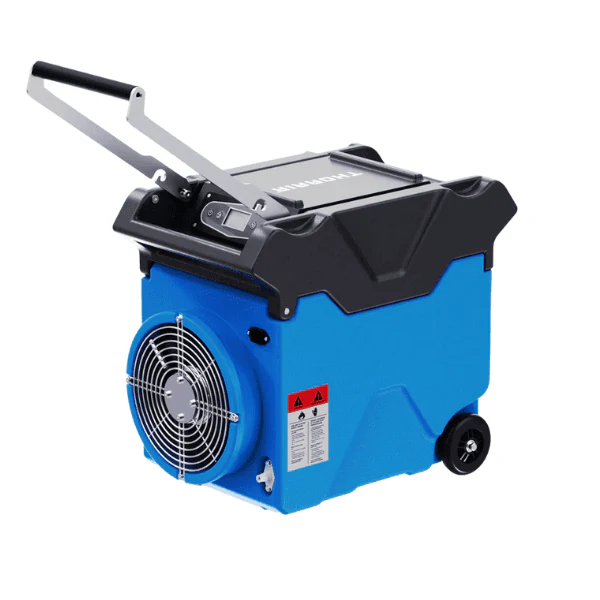 Product photo
From soaked to dry, the right way.
A dehumidifier works by drawing in damp air, condensing the moisture out, and returning drier air to the room — over a few days, that dries everything around it.
It draws in the damp air
A fan pulls the room's moist air across a cold coil. The air is constantly cycled, so the machine works on the whole space, not just what's right in front of it.
Moisture condenses out
As the air cools, the water in it condenses and collects — up to around 50 litres a day in the right conditions. That water is drained away rather than left in the room.
Drier air goes back out
The now-drier air is returned to the room. As the air dries, moisture is pulled out of carpets, walls and furnishings too — which is what actually dries the space.
You return it when it's done
Drop the machine back to the warehouse. If you want the space actually verified as dry rather than assumed, that's a moisture inspection — a separate job we can book in.
Drying stops mould getting worse — it doesn't remove what's there.
A dehumidifier is the right tool for taking moisture out of a space, which is exactly what mould needs to grow. But if mould is already visible, drying won't remove it — that needs proper remediation. We'll tell you which one your situation actually calls for.
If we think a hire machine won't solve your problem, we'll say so before you spend a cent.
Great after water damage
A burst pipe, overflow or recent leak where the room just needs drying out.
Great for damp-prone rooms
Holding humidity down while a longer-term fix is arranged.
Not a fix for existing mould
Visible growth needs removing — drying alone won't clear it.
The machine and the know-how.
You're not just renting a box. When you collect it we show you how to set it up in the right spot, sort the drainage and explain exactly how to keep it going.
Good to know about dehumidifier hire.
Straight answers — the same way we'd explain it on the phone.
How much water does it actually remove?
Do I have to keep emptying it?
How many days will I need it?
Should I pair it with a blower?
Will it get rid of the mould?
Need a space dried out? Let's get a machine to you.

"Tell me what happened and I'll tell you if a dehumidifier's enough — or if you need more."