Wet floors, dried faster.
A compact HEPA air mover — the "Turtle" — pushes a strong, focused stream of air across wet carpet, floors and walls. It speeds up drying and helps a dehumidifier work harder, so a soaked room comes back sooner.
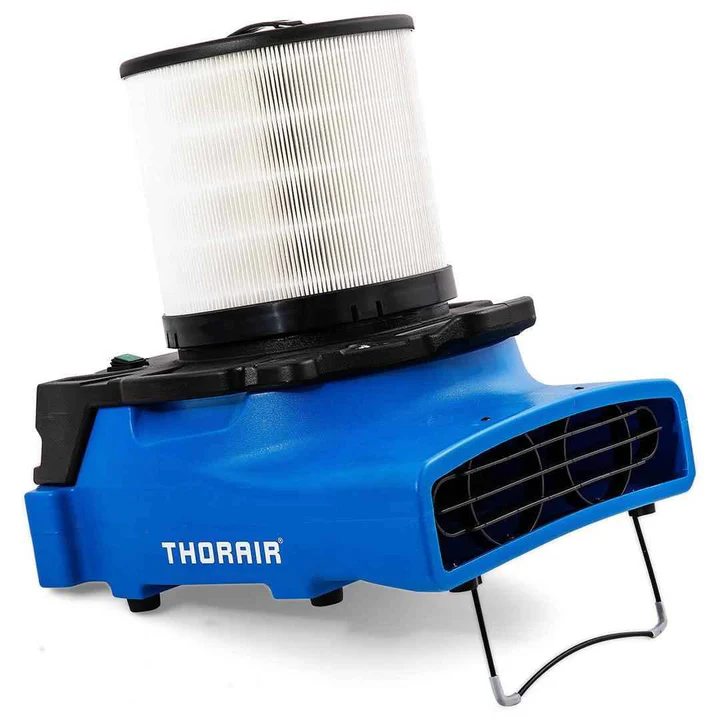 Product photo
It keeps the air moving over the wet.
Still air over a wet surface dries slowly. A blower fixes that — it sweeps a fast stream of air across floors and walls so moisture lifts off and the dehumidifier can grab it.
It sweeps air across the surface
Angled low to the floor, the blower pushes a strong stream of air right across wet carpet or hard floors — exactly where the moisture is sitting.
Moisture lifts into the air
That moving air carries water up off the surface and into the room's air, instead of letting it sit and soak — which is what slows natural drying right down.
The dehumidifier grabs it
Paired with a dehumidifier, the blower keeps feeding it moisture to pull out of the air. Together they dry a space far faster than either would alone.
Move it as it dries
We show you how to reposition it to chase the last damp spots. When the floor's dry, drop it back to the warehouse — and we can talk you through a moisture check to be sure.
A blower speeds drying — it isn't the whole job on its own.
On its own, a blower just moves air around. It dries fastest when it's paired with a dehumidifier pulling that moisture out of the room — otherwise the damp air has nowhere to go. And like all the gear, it dries; it doesn't remove mould that's already there. We'll set you up with the right combination.
If a blower alone won't do what you need, we'll tell you what will — before you hire anything.
Great for wet carpet & floors
After a spill, overflow or recent leak where the floor's soaked.
Best paired with a dehumidifier
The two together dry a space far faster than either alone.
Not a mould remover
It dries surfaces — it won't clear mould that's already growing.
The mover, a run-through and a plan.
You collect the blower ready to run, and we explain how to set the angle and move it as the floor dries — often alongside a dehumidifier so the whole job goes quicker.
Good to know about carpet blower hire.
Straight answers — the same way we'd explain it on the phone.
What's a carpet blower actually for?
Do I need a dehumidifier as well?
How many will I need?
Is it noisy?
Will it get rid of the mould?
Floor soaked? Let's get it drying today.

"Tell me how much got wet and I'll sort the right number of blowers — and whether you need a dehumidifier too."